
History
What was life like in a Stone Age settlement? Why is our village called Bloxham? How would you have prepared for an air raid?
At Bloxham, we encourage children to think like historians. They look closely at sources, handle objects, compare accounts and ask questions: Who made this? What does it tell us? Can we trust it? What might be missing? Visitors join us to share their experiences and knowledge, giving children more opportunities to listen and investigate.
We explore each topic in depth so that foundational knowledge becomes secure. Children return to important people, events and ideas through stories, reading, discussion, timelines, artefacts and visits. This helps them connect what they learn now with what they have studied before.
Starting with familiar lives
In Foundation’s Long Ago, children think about how they have grown and how life was different before they were born. Year 1’s Childhood and School Days invite them to compare their own experiences with childhood in the 1950s and schooling in Victorian times. In Year 2, Movers and Shakers and Magnificent Monarchs introduce people whose actions shaped the world.
The history of our own area helps children connect these bigger stories to real places. We draw on Bloxham and Banbury museums to explore local objects and accounts. When Year 4 study Anglo-Saxon Britain in Invasion, they discover a link in the name of their own village: Bloxham takes its name from Blocc’s ham, a Saxon settlement. Places such as Warwick Castle and Blenheim Palace give children opportunities to examine how people lived and how power was expressed.
Making the distant past feel close
Year 3’s Through the Ages takes children from the Stone Age to the Iron Age. The Rollright Stones provide a local connection to prehistory. At the Earth Trust, children have handled artefacts, practised starting a fire, created cave paintings and built woodland shelters. Back in the classroom, they can draw on these experiences as they examine the evidence for how people lived. In Emperors and Empires, they explore ancient Rome and discover evidence of Roman activity around Bloxham.
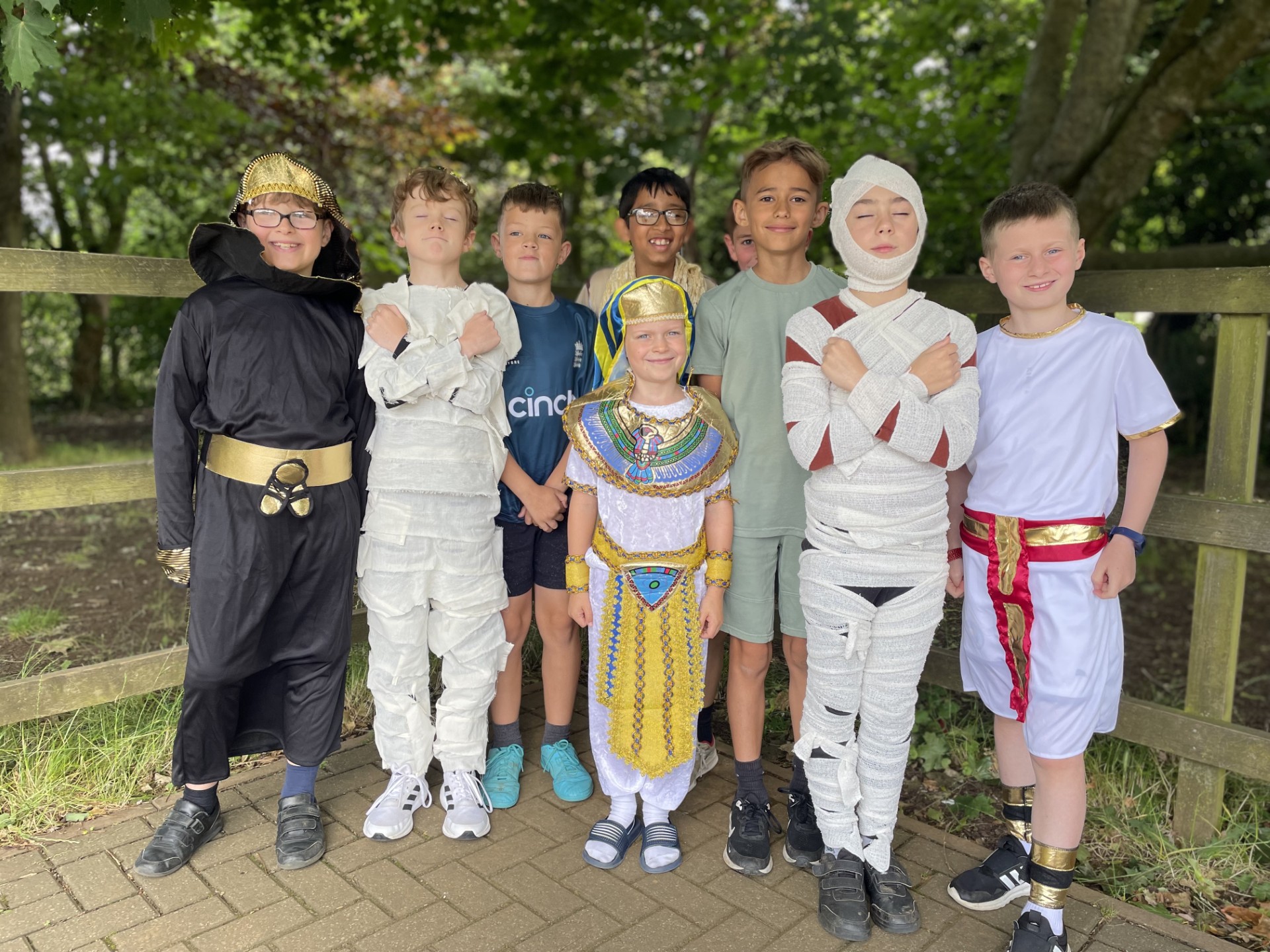
In Year 4’s Ancient Civilisations, children study Sumer, Egypt and the Indus Valley. Year 5’s Dynamic Dynasties introduces ancient China. A visit to the Shang Dynasty exhibition at Compton Verney, followed by making clay ding vessels, helps children examine an object from the past and consider its purpose. For Groundbreaking Greeks, pupils use AI and virtual experiences to explore places they cannot travel to, while investigating Greek life and ideas.
Exploring wartime lives
Year 6’s Britain at War brings major events into focus through individual experiences. At Holdenby House, children step into the role of wartime evacuees. They learn about rationing, prepare seasonal food, explore Make Do and Mend, and find out about gas masks and air raid shelters. Volunteers from Bloxham Museum have brought wartime artefacts into school and shared their knowledge, helping pupils connect the wider history of the war with stories from our area.
A visit or a conversation with a guest can spark a question. Returning to sources and discussing what they show helps children develop an answer. We want pupils to leave Bloxham with knowledge they can draw on, curiosity about the lives of others and the confidence to ask: How do we know?
Current families can find curriculum overviews and knowledge organisers on our Parent Portal.